Make Rooftop Safety Part of Your Facility Plan
Rooftop fall protection shouldn’t be an afterthought, especially when employees and contractors need regular access to rooftop equipment.
Whether you’re planning new construction, replacing a roof, upgrading HVAC equipment, or improving an existing facility, it’s a good time to evaluate your rooftop safety needs.
Installing permanent fall protection systems can help reduce risks, provide safer access for maintenance crews, and make rooftop safety a part of your everyday operations.
Do Workers Still Need Safety Harnesses?
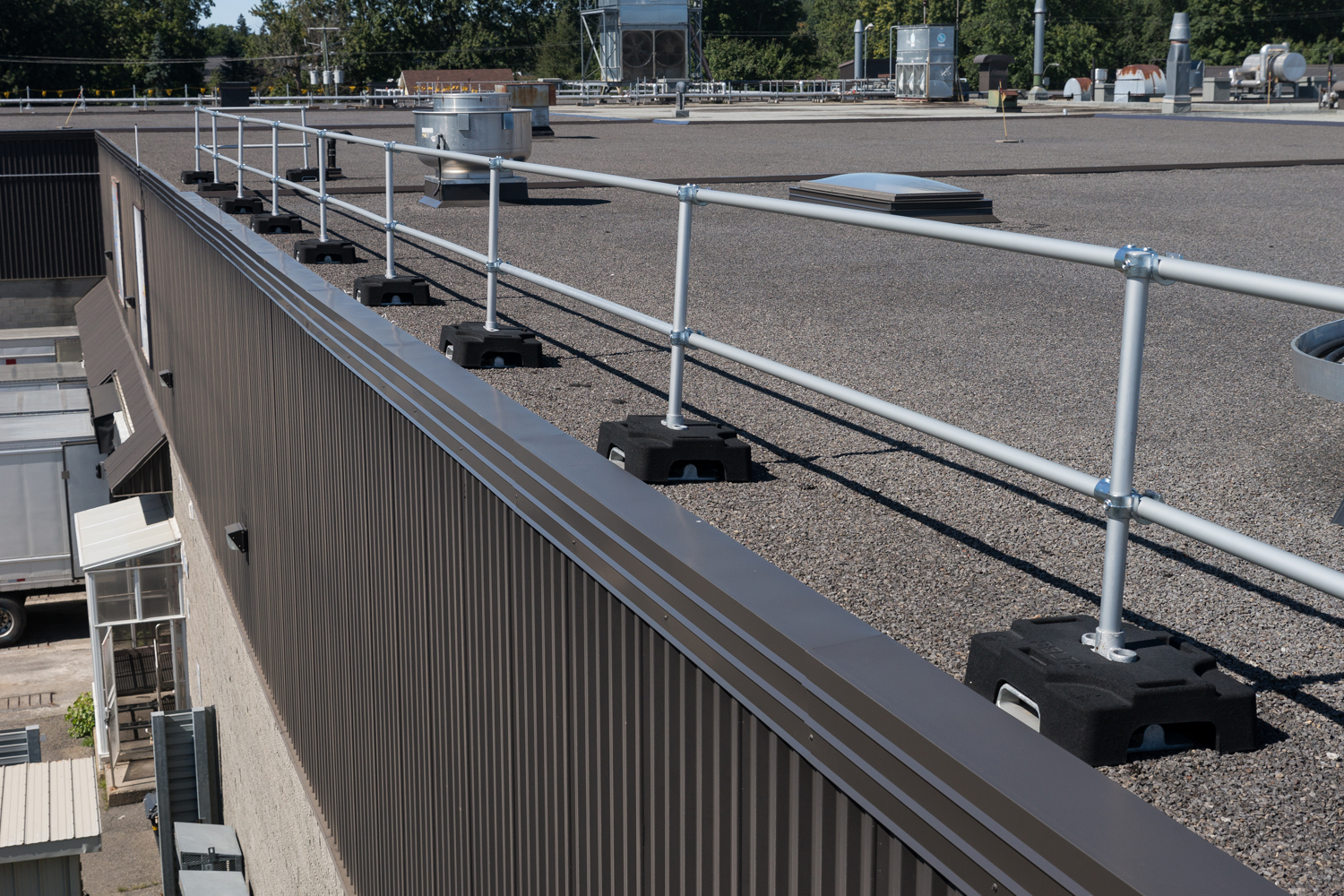
Not always. When properly installed, OSHA-compliant guardrails can provide fall protection without requiring safety harnesses within the protected area.
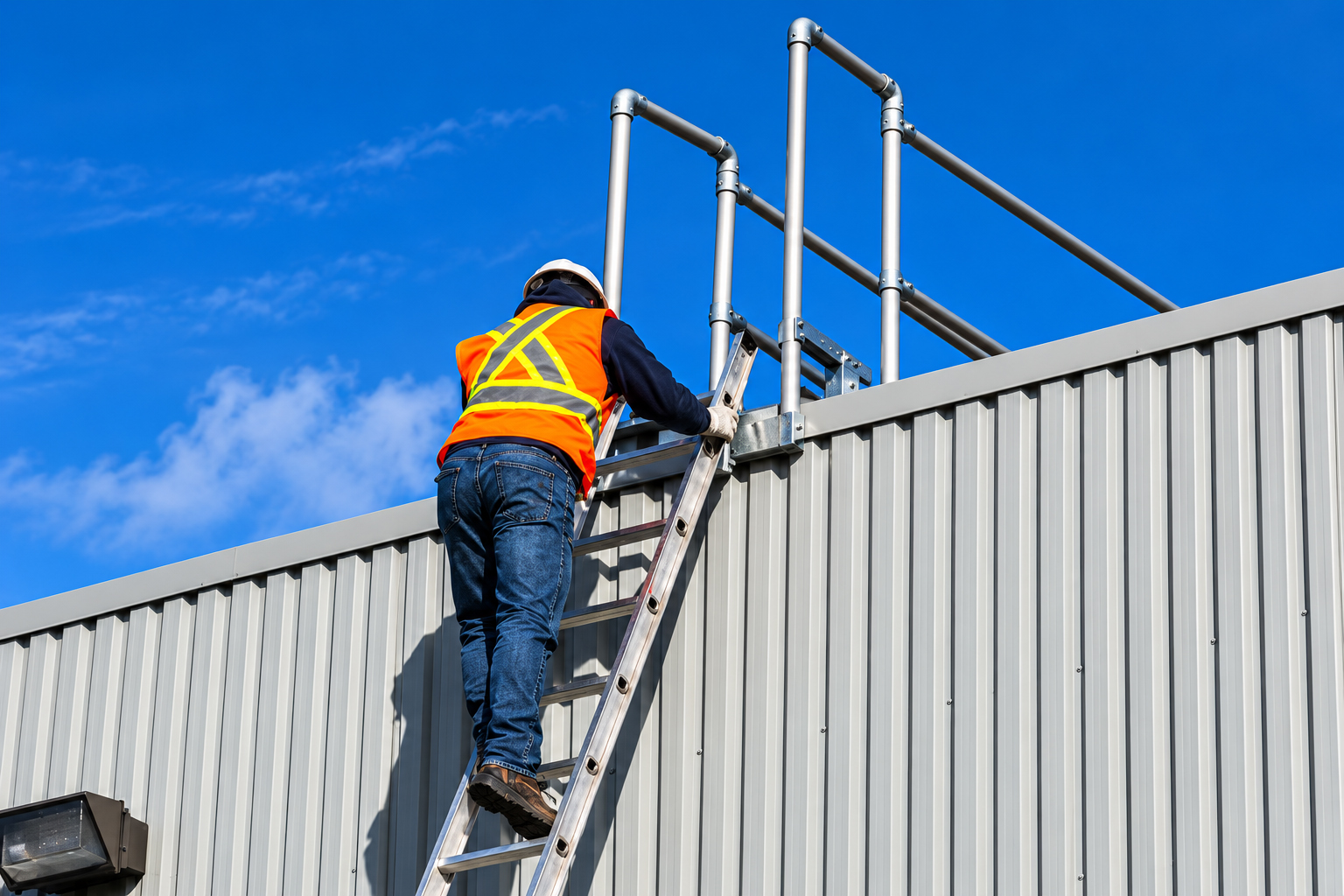
However, additional fall protection may still be needed when climbing certain ladders, working outside guarded areas, or accessing unprotected sections of the roof.
The key is understanding where your employees will be working and making sure the proper protection is in place.
Don’t Overlook Rooftop Conditions
Fall hazards aren’t limited to roof edges and openings. Wet surfaces, standing water, debris, snow, and ice can make rooftop maintenance even more dangerous.
Before work begins, it’s important to check rooftop conditions, identify potential hazards, and make sure employees have a safe path to the equipment they need to access.
How Do You Know What Your Roof Needs?
Not sure where to start? Take a look at how your rooftop is being used.
- Who regularly accesses your roof?
- Where do employees need to walk or perform maintenance?
- Are there exposed edges, skylights, roof hatches, or ladder access points?
- What rooftop equipment requires regular service?
- Are there areas where workers may need additional protection?
Identifying these areas can help you determine which fall protection solutions make the most sense for your facility.