DACO is proud to be 2023 / 2024 / 2025 / 2026 Winner of MHEDA Most Valuable Partner Award!

Menu
Generic filters

DACO Corp Logo

Generic filters
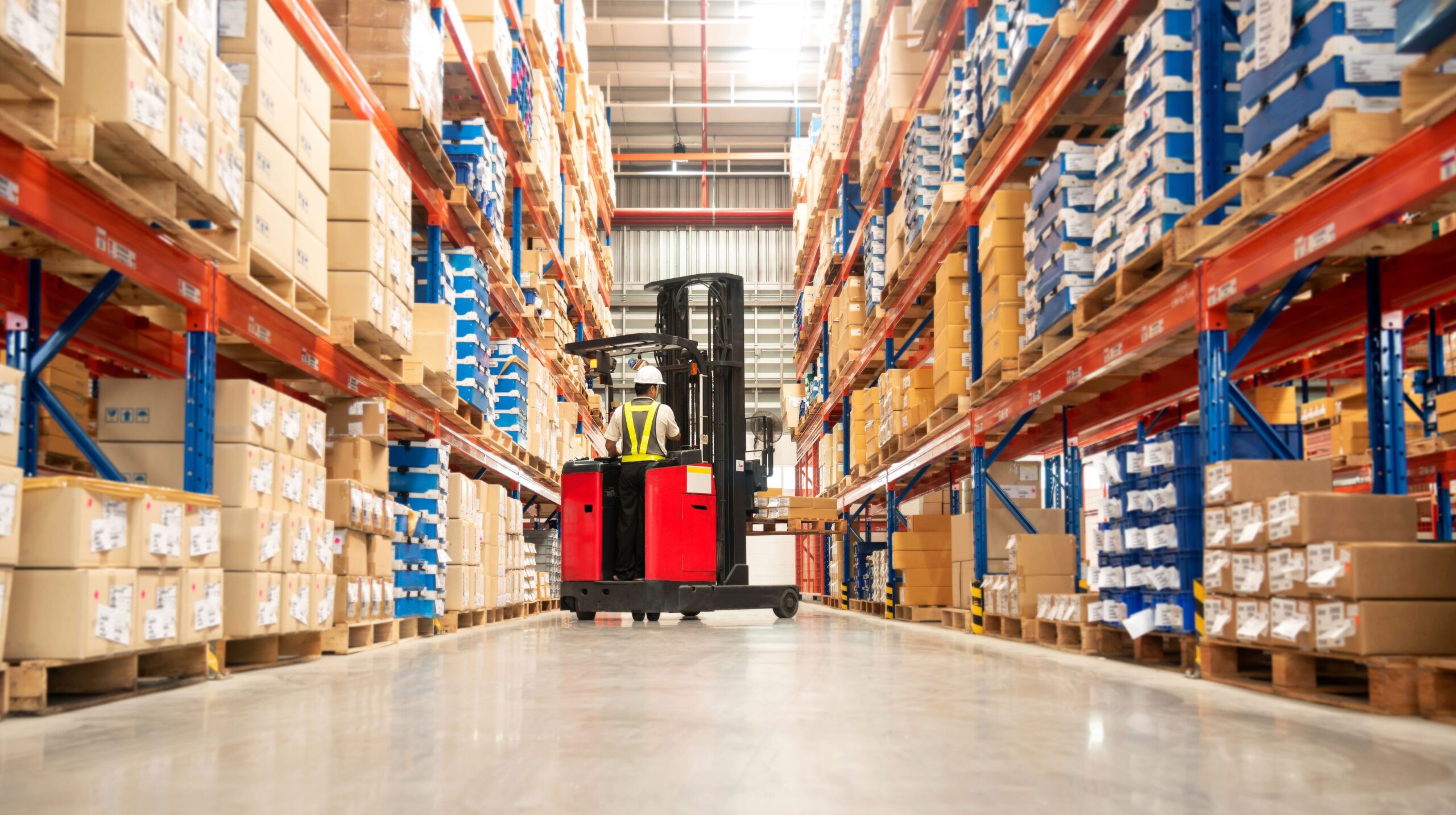
Tall aisle of pallet racking loaded with boxed pallets, with a forklift retrieving a load at the end of the aisle

PALLET RACKING

Pallet racking solutions help you optimize vertical storage, improve mobility, and enhance safety, tailored to your unique storage needs.

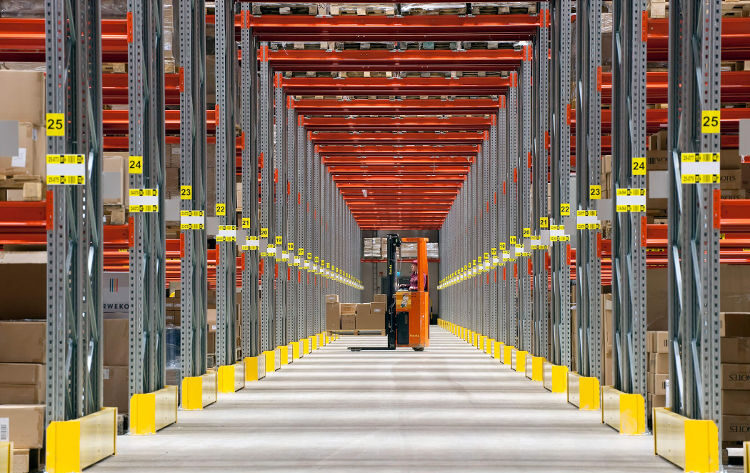
Warehouse worker operating a reach truck between tall aisles of pallet racking loaded with boxed pallets

PALLET RACKING SYSTEMS

Pallet racking is a storage system made of vertical frames and horizontal beams that lets warehouses store palletized product above floor level. It’s the foundation of most warehouse racking systems, and pallet racking systems come in several configurations, each suited to different storage, access, and throughput needs. Pallet racking systems are a great way to capitalize on square footage in a warehouse. These systems allow for increased vertical storage, greater mobility, and increased safety on the warehouse floor. Each pallet racking system has its own advantages and each warehouse has its own unique storage needs. When designed and used properly, a pallet racking system allows for increased product flow or storage, both in product variety and depth. For example, systems are geared towards long-term bulk storage while others are created to allow for short-term, high-turnover products.

TRUSTED PALLET RACKING SYSTEM SOLUTIONS

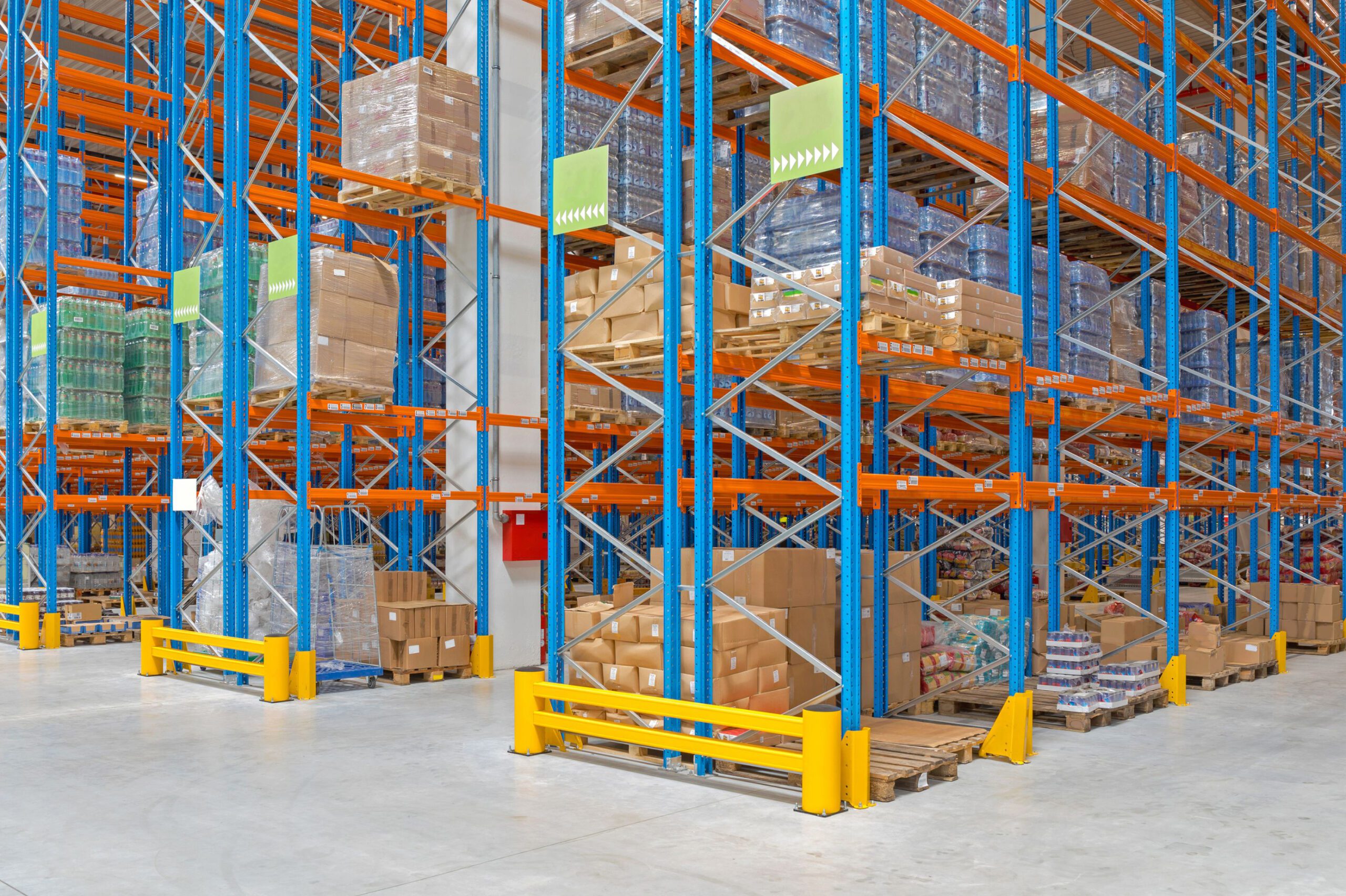
Blue selective pallet racking loaded with boxed and wrapped pallets, with yellow safety guardrails protecting the base of the uprights

SELECTIVE RACKING

Commonly used across many industries, selective pallet racking systems can be found in a wide variety of industries. These systems allow for access to each pallet bay but also require forklift access in aisle ways to stock each bay. A selective system is best used within a facility which has a large variety of products but a low turnover of individual products.

Explore Selective Pallet Racking
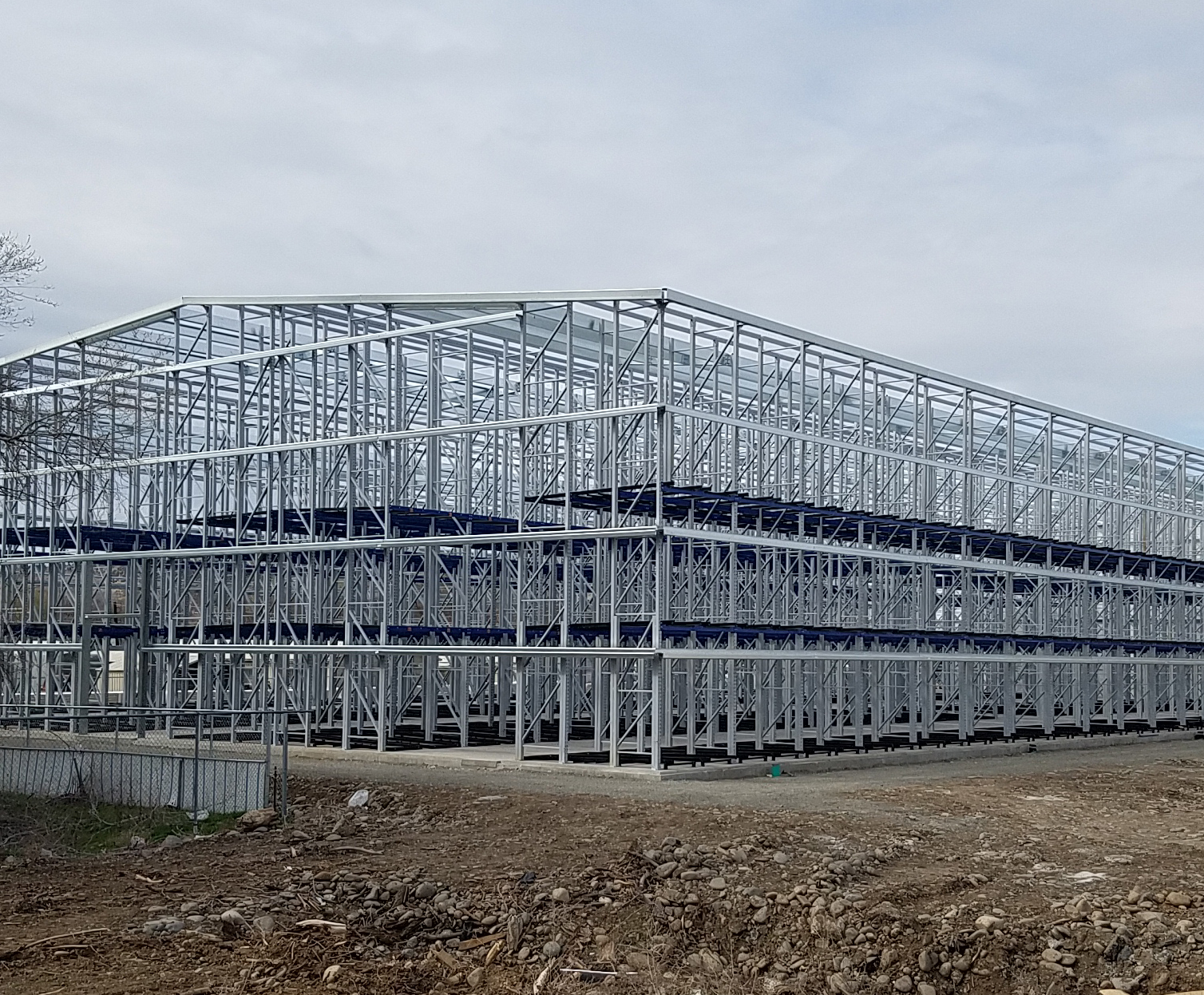
Multi-level steel rack-supported structure under construction outdoors, showing the exposed racking framework before walls and roofing are added

RACK SUPPORTED STRUCTURES

Rack supported structures play double duty. In addition to their use as a storage system, rack supported structures support the building as well. Once the rack structure is built, it will then be covered with walls and/or ceilings to protect the products. By combining the building phases of the building and the racking systems, these structures save time and money. These systems are a great way to create an ideal storage area.

Explore Rack Supported Structures
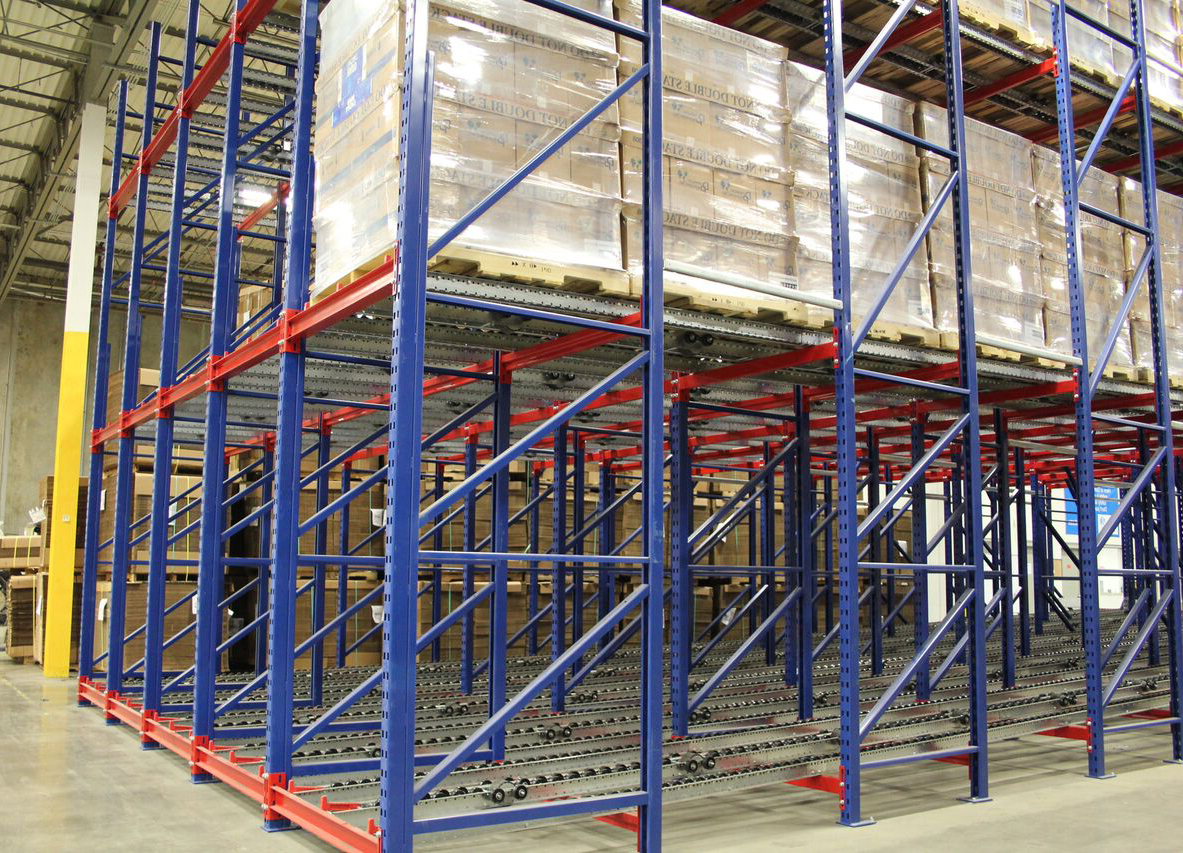
Tall pallet flow racking with blue frames and orange beams, showing the gravity roller lanes at the base and wrapped pallets loaded above

PALLET FLOW PALLET RACKING

Pallet flow pallet racking uses gravity to move pallets from a loading side to an unloading side. Due to the way the system moves product, this style is also called gravity flow racks. As a pallet is removed from the unloading side the pallets behind will automatically fill in the front position. This allows for more storage of a single product. The pallet flow system is best implemented in a first-in, first-out system.

Explore Pallet Flow Racking
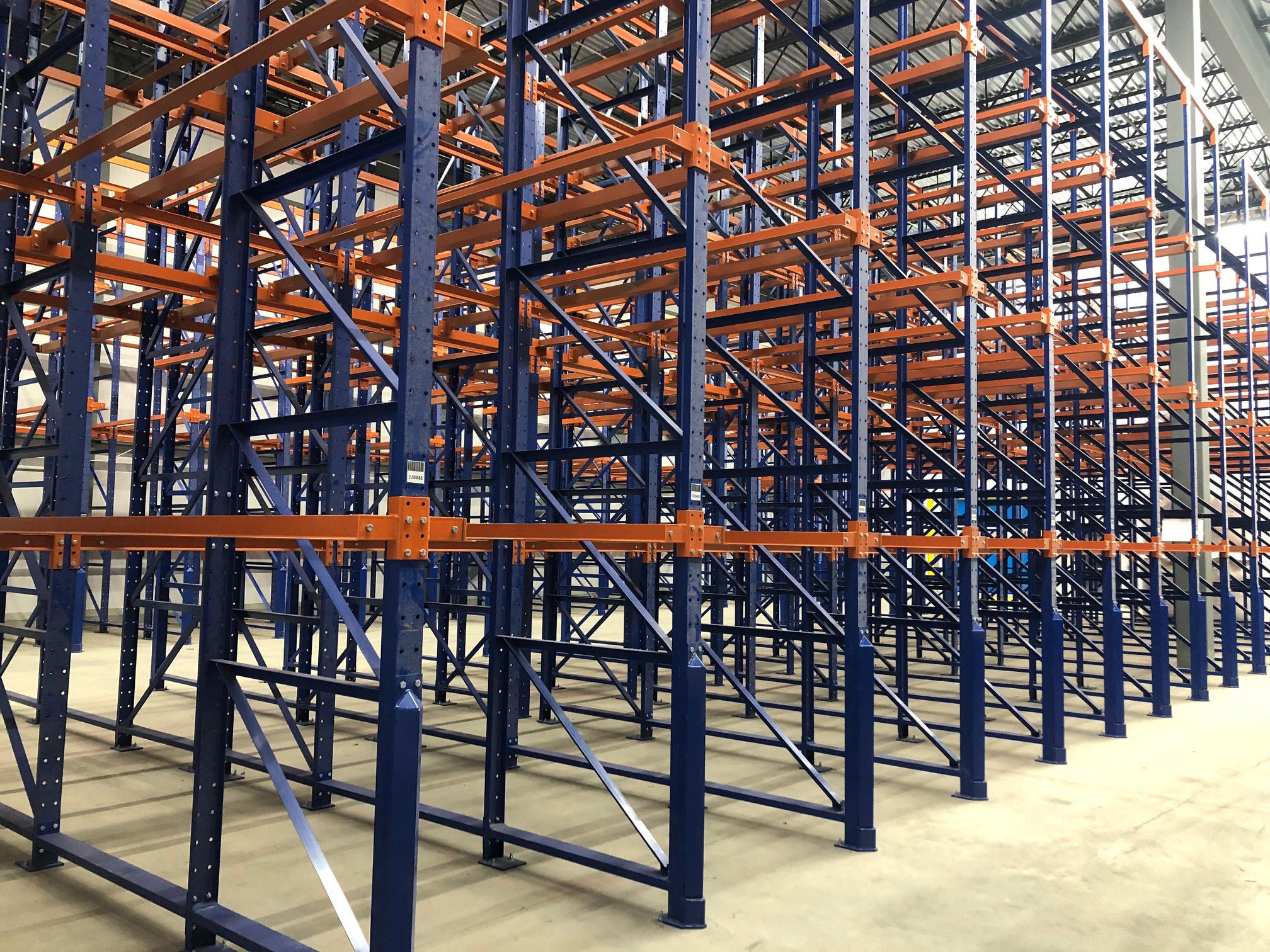
Rows of drive-in pallet racking with dark blue uprights and orange beams forming deep, continuous storage lanes in a warehouse

DRIVE IN & DRIVE THRU RACKING

Both drive-in and drive thru pallet racking systems are similar. They allow forklifts to load and unload products from one or both sides of the rack through a system of support rails. Each pallet position is dependent on the position of the other pallets. Drive-in systems have a single entrance, while drive thru systems allow for access on either lane. These systems are best used in high-capacity storage for a product.

Explore Drive-In & Drive-Thru Racking
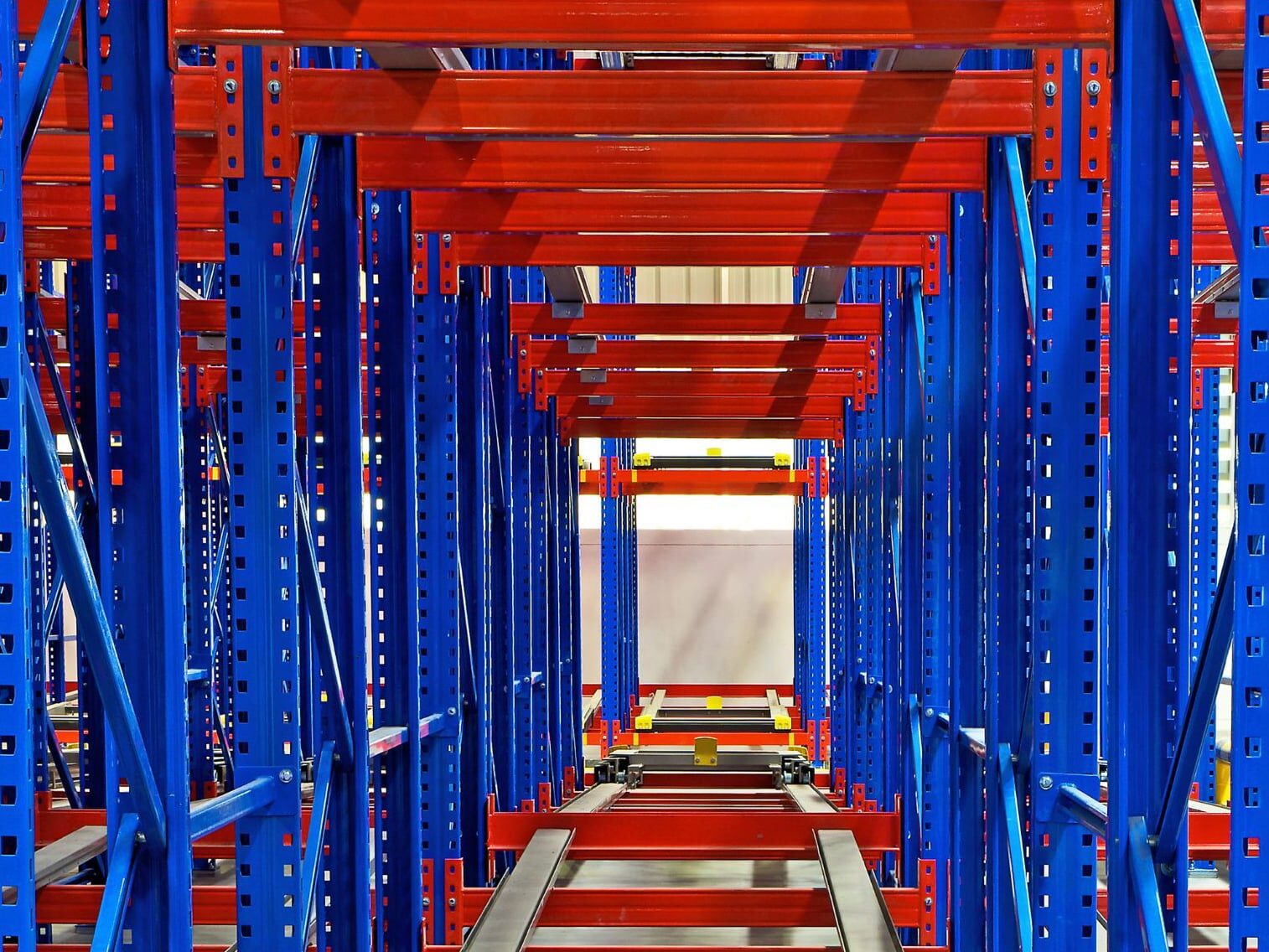
View down a deep push back pallet racking lane with blue uprights, orange beams, and a nested cart system visible at the back

PUSH BACK PALLET RACKING

Push back pallet racking systems are great options for warehouses that work with some selectivity of product, but with multiple pallets of each product. This racking system works by using gravity to feed the front of the system with angled rails. Each product lane is independent from other lanes, and these lanes can hold 2 to 6 pallets per lane, allowing for a last-in, first-out product management system.

Explore Push Back Racking
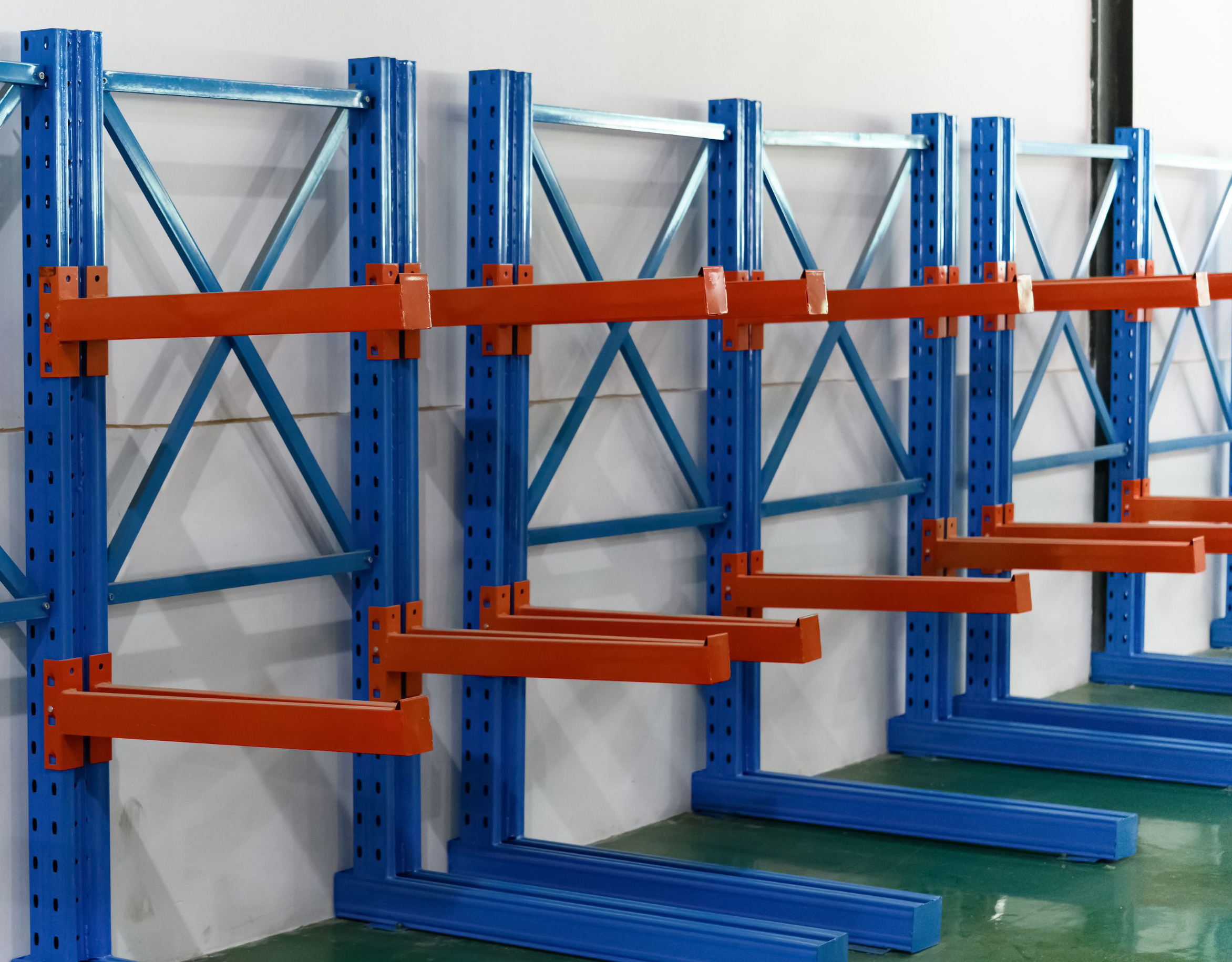
Empty cantilever racking with blue columns and extended orange arms for storing long or oversized materials

CANTILEVER RACK

Cantilever racking systems allow for the storage of large and awkwardly shaped items. Different from traditional pallet racks, these systems are made from a series of columns with adjustable arms. The construction of these racks means that there is no limit to the length of the stored product. This also means there is the capacity to store a wide variety of lengths, shapes, and weights in the same rack system.

Explore Cantilever Racking
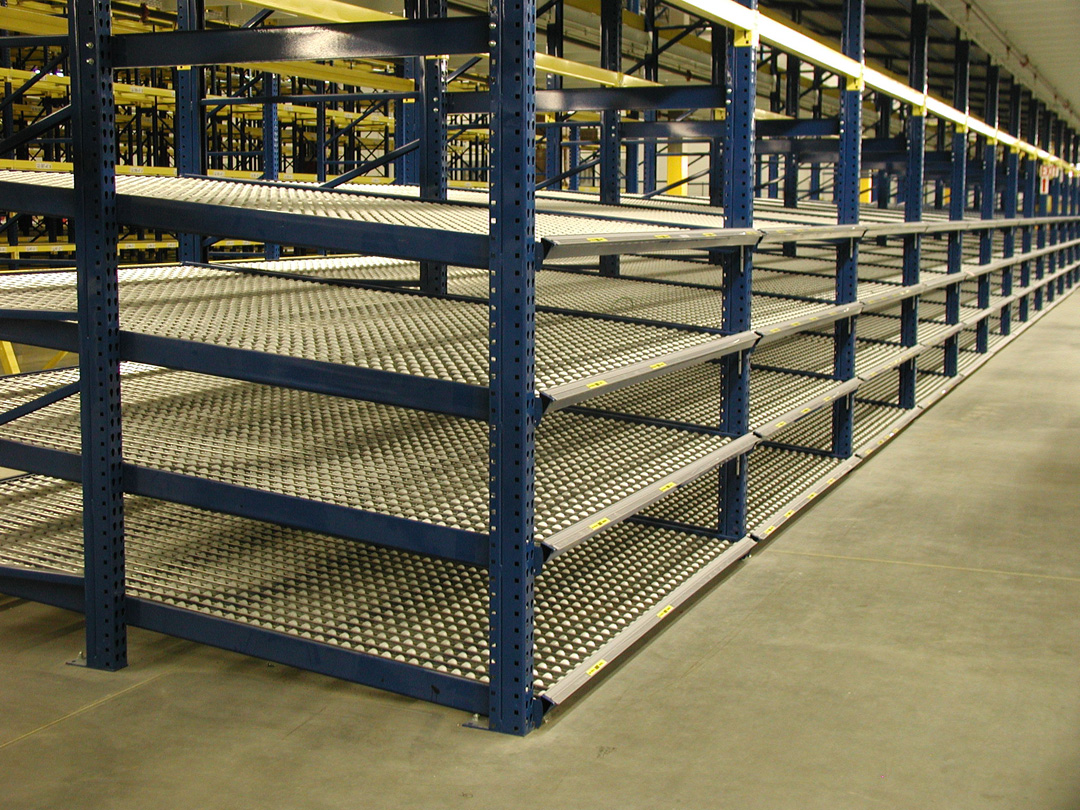
Tiered carton flow racking with angled wire-mesh shelving and roller lanes for gravity-fed case picking

CARTON FLOW / CASE PICKING

Carton flow / case picking racking is a great system to increase product flow. These systems use gravity to feed the front of the rack with product loaded from the back side. Carton flow systems are versatile, implementing either a roller lane which acts as a single flow, or on wheel beds which allow for a variety of products to be used. This system works best with case and piece-picking needs.

Explore Carton Flow & Case Picking
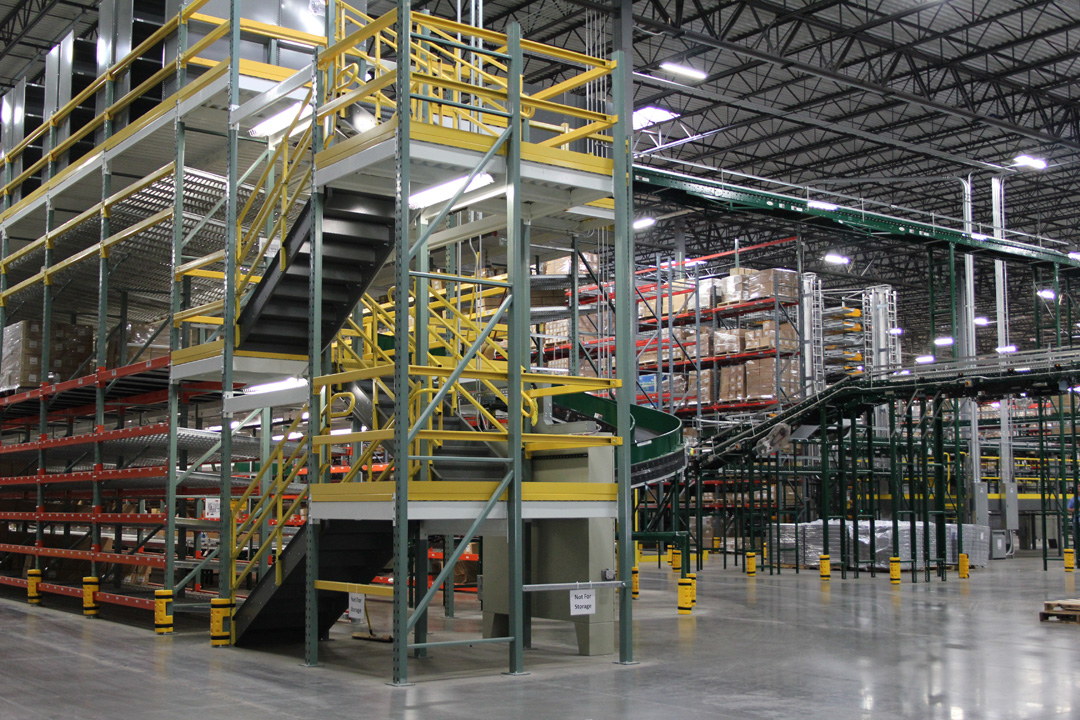
Multi-level pick module system with a mezzanine, staircase, conveyor, and pallet racking below for high-volume order picking

PICK MODULE SYSTEMS

Pick module pallet racking systems combine different features of storage, product handling, and shipping systems to make the most efficient system of high-volume case picking and small parts distribution. These systems use a variety of options including pallet racking systems, case flow racks, and conveyor systems. A pick modules system utilizes every option available to create a custom designed system. This provides the best solution for each project.

Explore Pick Module Systems
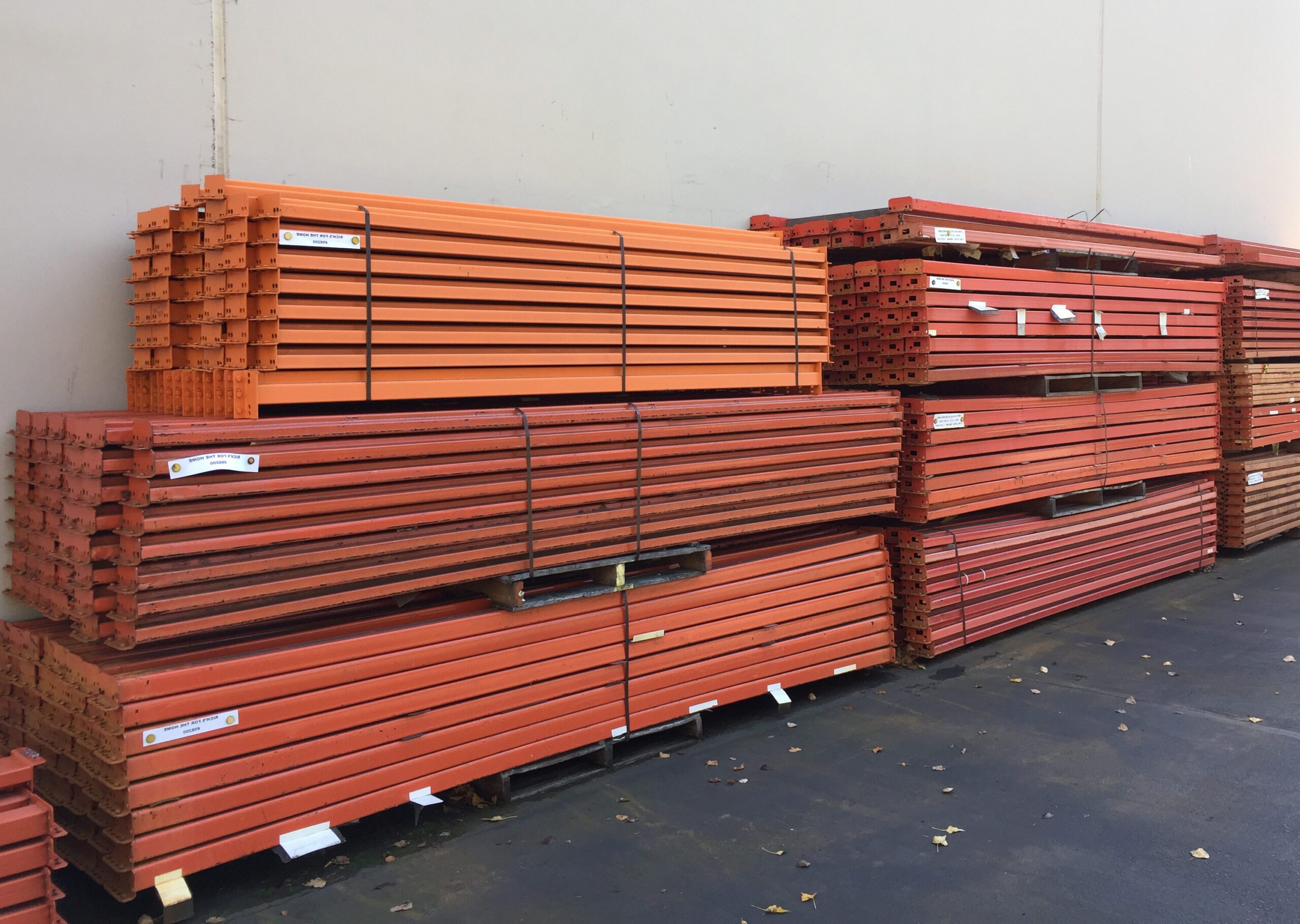
Stacks of used orange pallet racking beams and frames staged in a storage yard

USED PALLET RACKS

Whether buying or selling, DACO can assist you with your used pallet racking system needs. We carefully examine all used pallet racking components, so we ensure the safety of each part before resale. As our inventory of used pallet racking changes from day to day, we may or may not be able to offer an exact match for your replacement needs.

Explore Used Pallet Racking
Close-up of a yellow Danger, Do Not Operate safety tag hanging on a pallet rack component

PALLET RACK REPAIR, SAFETY, & ACCESSORIES

Pallet racking systems are most efficient when used with proper safety and accessories. Safety of pallet racking systems can be enhanced through different safety accessories both on the racks and separate from the racks. Repeated use of pallet racking requires maintenance and inspection to prevent any problems. If any safety concerns are found, it is important to repair the parts causing concern.

Explore Pallet Rack Repair & Safety

PALLET RACKING SYSTEM COMPARISON

Each pallet racking system offers a different balance of selectivity, storage density, and floor space efficiency. The table below compares DACO’s core pallet racking systems side by side to help you narrow down the right fit before you reach out to our team.

Pallet Racking System Best For Selectivity Storage Density Forklift Access
Selective Pallet Racking Facilities with many different SKUs Full — every pallet directly accessible Lower Direct aisle access to every bay
Rack Supported Structures New builds combining racking with the building shell Depends on the racking configuration used inside Varies Varies
Pallet Flow (Gravity Flow) Racking High-volume, first-in-first-out product Limited — one SKU per lane High Load from one end, pick from the other
Drive-In & Drive-Thru Racking High-capacity storage of fewer SKUs Low — last-in-first-out (drive-in) High Forklift enters the rack structure itself
Push Back Pallet Racking Multiple pallets per SKU with some selectivity Moderate — last-in-first-out per lane High Loaded/unloaded from the same aisle
Cantilever Rack Long or irregularly shaped items (lumber, pipe, etc.) Full access along the arm length Varies by item length Open-front access, no upright obstruction
Carton Flow & Case Picking Case- and piece-picking operations High — organized by SKU on each shelf Moderate Gravity-fed to a fixed pick face
Pick Module Systems High-volume, multi-level picking operations High High (uses vertical space) Combination of levels, stairs, and conveyor
Used Pallet Racking Budget-conscious buyers or fast turnarounds Depends on the racking type sourced Depends on the racking type sourced Depends on the racking type sourced

DACO-supplied racking commonly ranges from 4′ to 40′ high with shelf capacities up to 20,000 lbs, depending on the system and configuration.

CREATING THE IDEAL RACKING SYSTEM

Knowing the needs of your warehouse and your company will allow you to create an ideal pallet racking system for your storage needs. These systems are versatile enough to use a combination of systems within the same warehouse and allow for use across a number of different industries. Pallet racks can be combined with other warehouse systems such as conveyors to create optimal product storage, handling, and shipment, saving time and money throughout a facility.

Once your storage rack is installed you might want to consider any number of warehouse safety considerations & accessories, such as pallet rack safety enclosures that help keep goods safely contained within the bays, rack labels which display the beam and rack capacities, and wire decking that allows you to store non-rack supported pallets of goods in a safe and stable manner.

To make the most out of a pallet rack system, it is essential to include all of the proper accessories and safety equipment. Also, inspection and repair of any damaged pallet racks are crucial to ensure proper warehouse safety.

How to Choose the Right Pallet Racking System

Choosing the right pallet racking system starts with understanding your product mix and how it moves through your warehouse. A few questions can help point you in the right direction:

  • How many different products (SKUs) do you store, and how often does each one turn over? Facilities with many SKUs and frequent picking typically benefit from selective racking’s full accessibility. Facilities storing large quantities of fewer SKUs often get more out of high-density systems like drive-in, drive-thru, or pallet flow racking.
  • How much floor space and ceiling height do you have to work with? High-density systems like push back and drive-in racking make the most of limited floor space, while pick module systems help maximize vertical space in taller facilities.
  • Do you have long, bulky, or irregularly shaped items? Cantilever racking is built for exactly this kind of product.
  • Is this a new build or an existing structure? Rack supported structures can combine the racking system with the building shell itself, saving time and cost on new construction.

Every warehouse has its own mix of these factors, and most facilities end up using a combination of systems rather than just one. Talk with a DACO racking expert to walk through your specific operation and get a recommendation tailored to your space.

PALLET RACKING INSTALLATION & ANCHORING

Pallet racking should be installed according to the system design, manufacturer requirements, applicable rack standards, and local building requirements.

Anchoring and permitting needs can vary based on the rack type, layout, facility, seismic conditions, and jurisdiction. DACO has experience designing and installing pallet racking for projects with seismic and permitting considerations.

Contact DACO to discuss installation and anchoring for your project.

PALLET RACKING SAFETY & INSPECTION

Pallet racking should be inspected regularly for visible damage or changes that could affect its safe use. Common things to look for include damaged or bent components, loose or missing hardware, signs of impact, the condition of load and capacity signage, and the condition of safety accessories such as rack guards and wire decking.

Inspection and maintenance should follow the rack manufacturer’s requirements and recognized industry guidance, such as standards published by the Rack Manufacturers Institute (RMI), rather than a one-size-fits-all schedule. If damage is found, the affected component should be evaluated and addressed before the rack is used again.

DACO’s Pallet Rack Repair, Safety & Accessories team can help inspect, repair, and outfit your existing racking.

Overhead view of a team in hard hats reviewing a warehouse racking layout blueprint together

THE DACO ADVANTAGE

As we gain an understanding of your business, we can design and supply an efficient storage system preserving capital on the front en, and increasing profit after implementation.

  • A material handling storage system designed to fit your needs by an experienced team.
  • Material is available in-stock in Kent, WA and from drop-ship locations throughout the United States.
  • Extensive experience in high pile storage permitting and racking in seismic areas.
  • All racking products offered will conform to RMI specifications to ensure safety and maximum utility.
  • Storage systems have been designed and installed throughout North America.
  • Powder coated paint finish with option for galvanizing.

IDEAL APPLICATIONS FOR PALLET RACKING

Storage rack applications are limitless and include both the standard configurations and the custom designed. Commonly supplied products range from 4′ to 40′ high with shelf capacities up to 20,000 lbs. Installations cover North America ranging from Alaska to Mexico and Washington to Florida and Hawaii. Height, aisle width, and capacity all work together to determine the right configuration for your space, and aisle width is typically driven by the type of forklift or material handling equipment used in your facility.

  • Dry Storage Ambient Temperature Warehouse
  • Cooler or Freezer
  • Exterior Rack
  • Wash Down
  • Manufacturing
  • Distribution Centers
  • Food Processing & Distribution
  • Third Party Logistics Warehouses
  • Metal Suppliers
  • Military Installations
  • Automotive Manufacturing
  • Aircraft Manufacturers
  • Carpet Storage
  • Aerospace
  • Record Storage
  • Lumber and Building Products
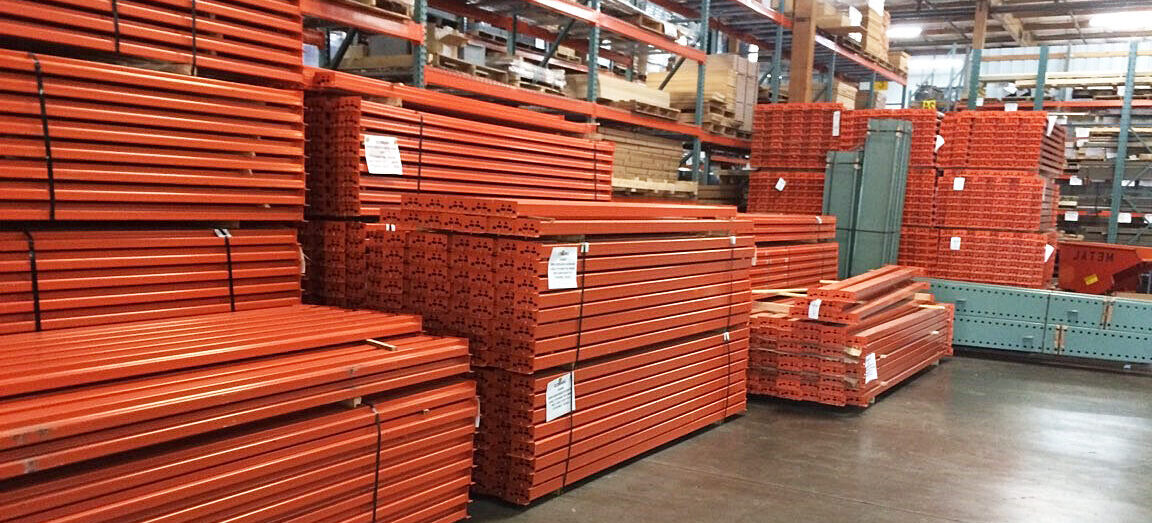
Warehouse stocked with organized stacks of orange pallet racking beams, uprights, and components

Large In Stock Inventory

We stock various sizes and gauges of new and used pallet racking beams, uprights, footplates and wire decks, so we can custom design a racking system just for you. Looking specifically for used racking? Visit our Used Pallet Racking page to see what’s currently available — our team can help evaluate fit and compatibility for your specific system.

FREQUENTLY ASKED QUESTIONS

What is pallet racking?

Pallet racking is a storage system made of vertical frames and horizontal beams that lets warehouses store palletized product above floor level, making better use of vertical space than floor stacking alone.

What are the different types of pallet racking?

Common types include selective, drive-in/drive-thru, pallet flow, push back, cantilever, and rack supported structures, along with related systems like carton flow and pick modules for case- and piece-picking. Each is suited to different combinations of product variety, turnover speed, and available space.

How much weight can pallet racking hold?

Capacity depends on the specific rack design, beam and upright configuration, and how the system is engineered and loaded — every rack system should have its capacity confirmed against its rated load plate rather than assumed. Speak with a DACO racking expert to determine the right capacity for your application.

How do you calculate pallet rack capacity?

Rack capacity is determined by the combination of beam capacity, upright frame capacity, and the overall engineered design of the system — not by a single universal number. A qualified racking provider should evaluate your specific configuration and loading pattern to confirm safe capacity.

Does pallet racking need to be anchored?

Pallet rack anchoring requirements depend on the rack design, installation, applicable standards, facility conditions, and local code requirements. Proper anchoring is an important part of many pallet rack installations, and the system should be installed according to its engineered design and applicable requirements.

How often should pallet racking be inspected?

Regular inspection is an important part of maintaining a safe racking system, and damaged components should be repaired or replaced promptly. DACO’s Pallet Rack Repair, Safety & Accessories team can help assess and maintain your system.

What pallet racking system is best for my warehouse?

The right system depends on factors like product variety, turnover speed, available floor space, and ceiling height. DACO’s team can help evaluate your operation and recommend the right configuration — get in touch to start the conversation.

Four professionals in hard hats looking up and pointing while touring a warehouse racking installation

Need Help Deciding Which Pallet Rack System is Right For You?

With so many racking systems to choose from, deciding which one is right for your business can be a challenge. DACO has years of experience helping our customers increase and maximize their storage space by picking the right system for their business. We look forward to partnering with you to help you do just that.

CONTACT US TODAY