Can we help you find what you need?
Talk with our team or send us a message.
- Live Chat (Lower Right Corner)
- 📞 Call Now 877-764-0453
- ✉️ Send a Message

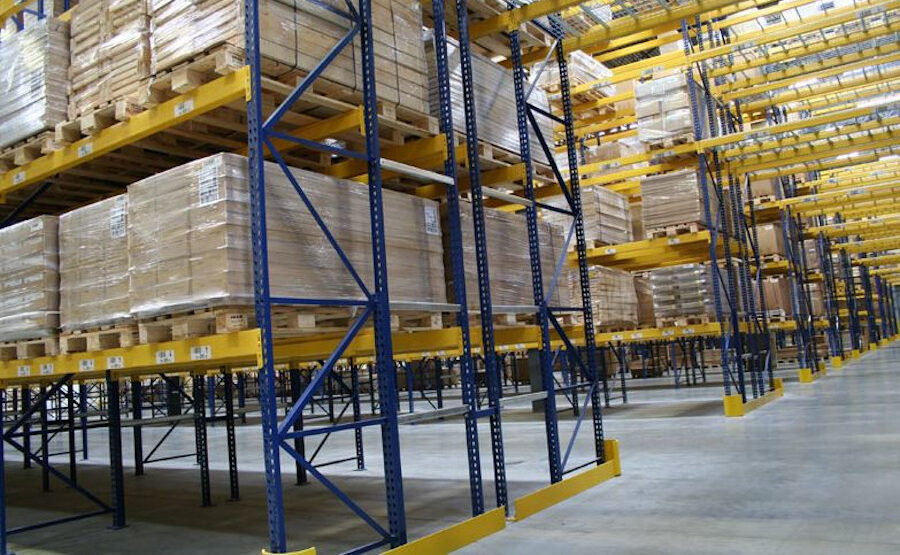
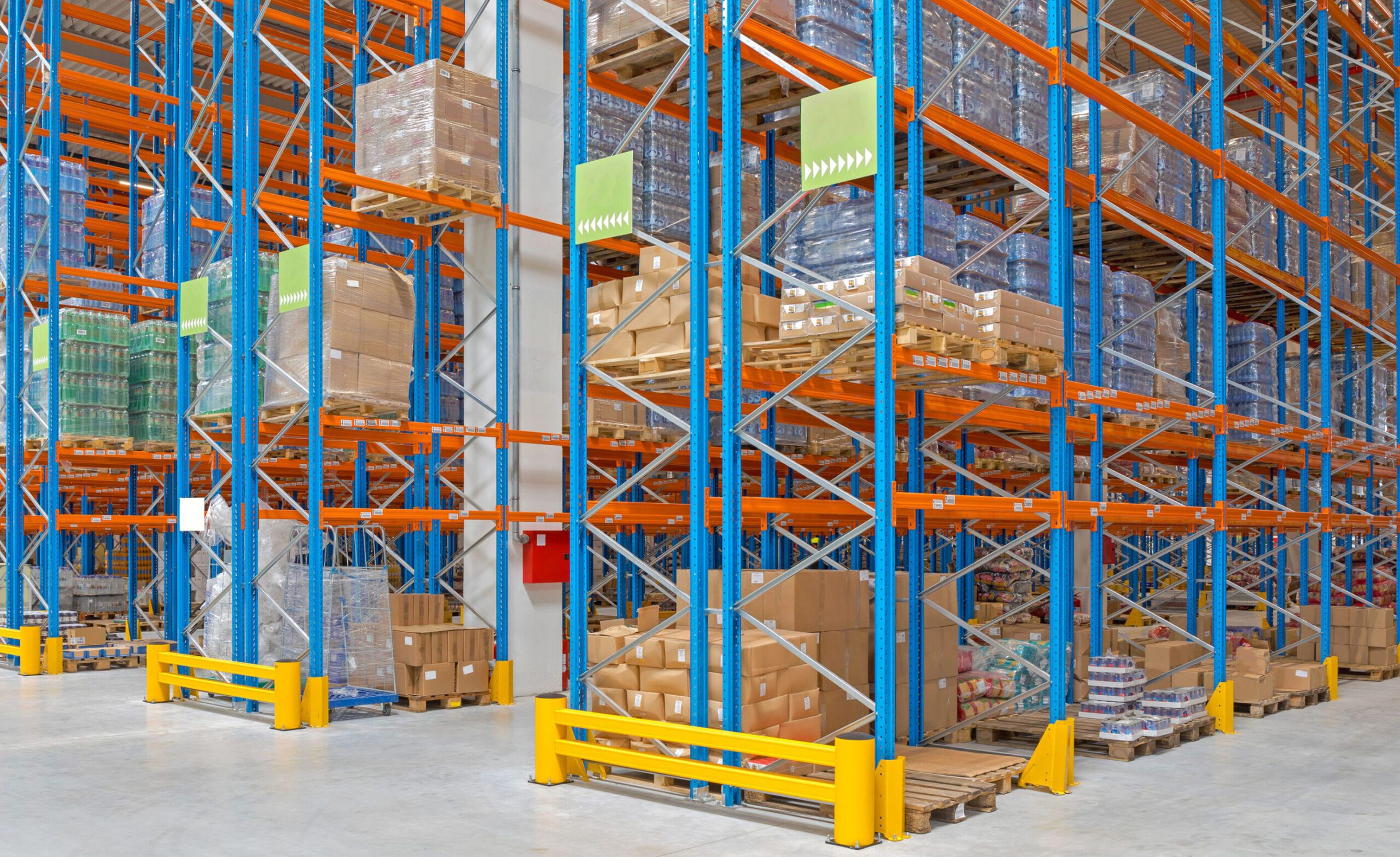
Selective pallet racking is a warehouse storage system built from vertical upright frames and horizontal beams that create individual, single-deep positions for each pallet. It is the most widely used racking system in the industry, largely because it offers 100% selectivity, meaning every pallet can be loaded or removed directly, without shifting any other pallet out of the way.
That direct access makes selective racking the standard choice for operations with a high number of SKUs, frequent order picking, or inventory that turns over on a first-in, first-out basis. Distribution centers, manufacturers, food and beverage processors, and general warehousing operations all rely on a selective racking system as the backbone of their storage layout.
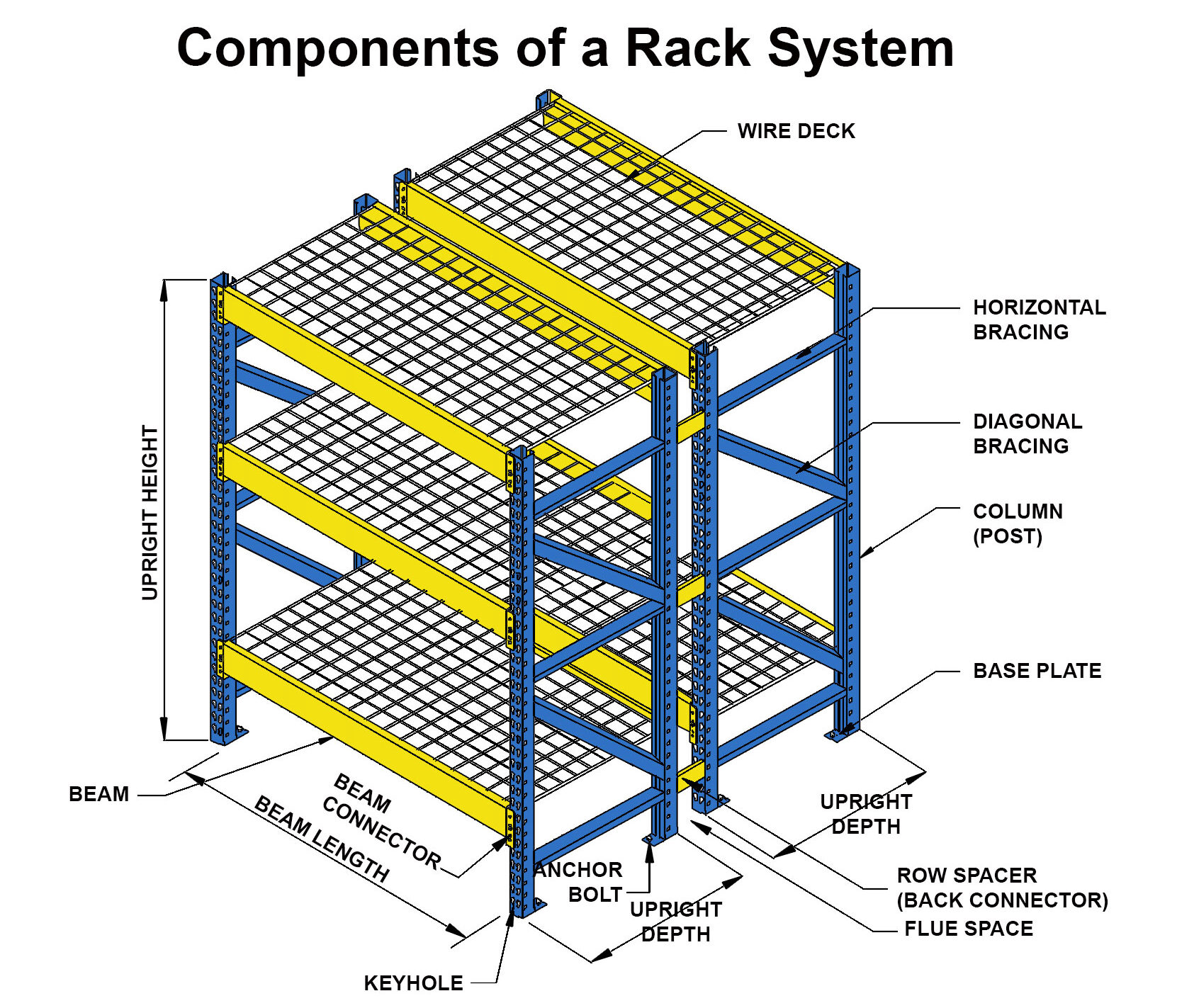
A selective rack system is built from a small number of core parts:
Most facilities use roll form selective pallet racking, built from cold rolled, tubular steel with boltless beam-to-upright connections. Beams lock into place using teardrop-style connectors and safety pins; no nuts or bolts are required. Roll form racking costs less than structural steel racking and installs faster, which is why it is the standard choice across most industries. Structural steel racking is available for higher-impact environments, such as facilities running narrow-aisle forklifts or handling unusually heavy loads.
This tubular design also provides increased rigidity and resists abuse more effectively than open-backed frames and beams. Beams attach using safety-locking end plates instead of nuts and bolts, and the teardrop-style connection points allow components to be quickly and securely interlocked. That combination of versatility, flexibility, and easy reconfiguration is what gives roll form racking an advantage over other styles.
Selective pallet racking can be positioned against a wall or back-to-back in rows, depending on your available floor space and aisle layout. Every layout should still be engineered around your actual inventory and equipment, not a generic template. Key factors include:
Beam capacity should always be posted on load capacity labels at each level, so there is never a question about how much weight a given position can hold. If your storage needs to change over time, selective racking can be reconfigured, but any change to beam height or spacing should be reviewed by a material handling professional to confirm the new layout still meets structural and safety requirements.
Selective pallet racking trades storage density for accessibility. High-density systems like drive-in rack or pallet flow rack pack more pallets into the same footprint but require moving other loads to reach the one you need. Selective racking skips that tradeoff:
Selective racking is the right starting point for most warehouses, especially those with a wide product mix, changing inventory, a high number of SKUs, or a need to store full and partial pallet loads. Its combination of low cost, direct access, and flexibility is why it remains the standard choice across distribution, manufacturing, and general warehousing operations.
If your facility stores large volumes of a small number of SKUs and needs to maximize storage density, a higher-density system such as drive-in rack, pallet flow rack, or push back rack may make better use of your available space. Talking through your inventory and throughput needs with a material handling expert is the best way to determine which system fits your operation.
DACO has designed and installed pallet racking systems throughout Washington, Oregon, Idaho, and Alaska for over 50 years. We understand this region, its seismic requirements, its industries, and the unique demands of facilities from Seattle to Spokane to Portland to Anchorage and beyond.
Whether you’re in a major metro area or a more remote facility, our team brings the same level of design, permitting, and installation expertise to every project.
While the Pacific Northwest is our home base and primary focus, DACO has also designed and installed racking systems for projects throughout North America when the right opportunity calls for it.
DACO has partnered with warehouses, manufacturers, and distributors for over 50 years to design and install racking systems built around how they operate. Our team will evaluate your inventory, equipment, and facility to recommend a selective racking layout that fits your long-term storage needs.
Contact us today!


2023, 2024 & 2025 Winner of MHEDA Most Valuable Partner Award