
DACO is proud to be 2023 / 2024 / 2025 / 2026 Winner of MHEDA Most Valuable Partner Award!

Menu
Generic filters

DACO Corp Logo

Generic filters
Industrial mezzanine

The Faster Way to Add Space Without Expansion

POSTED IN: Uncategorized 04/28/2026

The Hidden Capacity Inside Your Facility

Industrial buildings are designed with tall clear heights for a reason. That vertical space exists so operations can grow, adapt, and scale over time. Yet many facilities continue operating almost entirely at ground level.

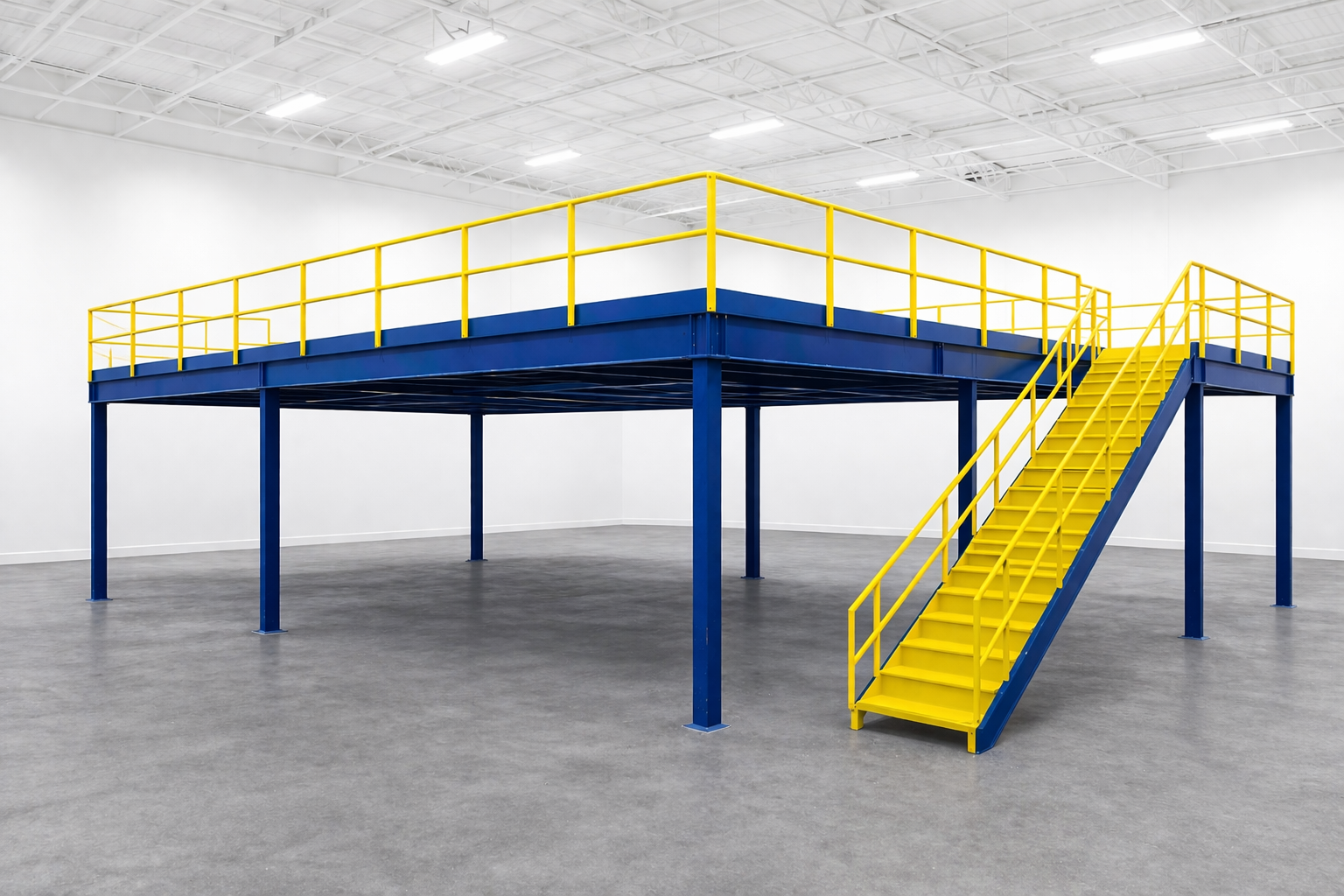
A properly designed mezzanine transforms that unused overhead area into productive square footage. Suddenly the same building can support offices, production support areas, inventory storage, packaging stations, or work platforms without changing the facility footprint.

Instead of expanding outward, operations expand upward.

This approach allows businesses to dramatically increase usable space while keeping the workflow they already rely on.

When Operations Begin to Feel the Pressure

Space shortages rarely happen overnight. They creep in gradually as businesses grow. One more product line. One more piece of equipment. One more customer that needs faster fulfillment.

Over time the symptoms become obvious.

Inventory starts overflowing into walkways. Workstations get pushed closer together. Staging areas shrink. Managers spend more time figuring out where to place materials than improving the process itself.

In food processing facilities, bakeries, seafood operations, and manufacturing plants, the pressure can be even greater. These environments require strict organization, sanitation, and workflow separation. When space disappears, maintaining those standards becomes harder.

Teams do their best to work around the problem, but the real solution is creating more usable square footage inside the building they already operate in.

Turning Overhead Space Into Real Capacity

A well engineered mezzanine does more than simply add a platform. It creates a fully functional second level that integrates with the way the operation actually works.

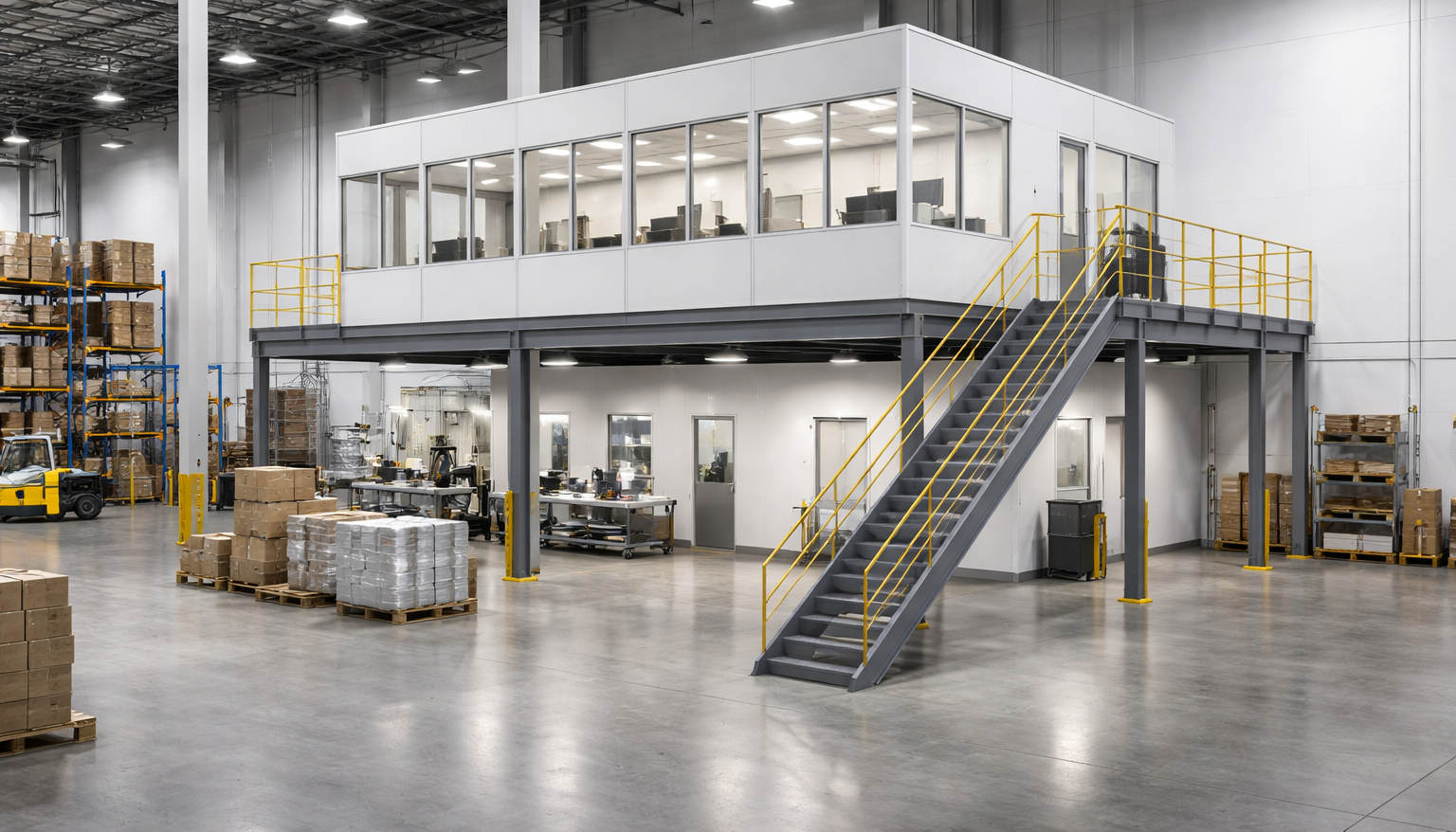
Storage areas can be relocated above active production zones. Packaging supplies can move off the main floor. Offices or quality control stations can sit above operations while maintaining clear visibility of the process below.

This vertical separation often improves workflow rather than complicating it. Materials move more predictably, work areas stay organized, and employees gain back the space they need to operate safely and efficiently.

The result is a facility that feels larger, more structured, and easier to manage.

Designed for the Way Your Facility Works

Every facility operates differently. The equipment, products, and processes inside a building shape how space should be used.

That is why mezzanine systems must be designed around the workflow rather than simply dropped into an open corner of the building. Load requirements, equipment access, material flow, safety regulations, and local building codes all play a role in how the system should be engineered.

When designed correctly, the mezzanine becomes part of the operation rather than an obstacle inside it. Employees move naturally between levels. Forklifts, conveyors, and pallet handling systems integrate smoothly. And the structure supports both current needs and future growth.

Walk through almost any busy warehouse, food processing facility, or distribution center and you will see the same story unfold. Pallets creep into aisles. Production areas slowly shrink. Teams begin working around stacks of inventory that were never meant to live there.

At first it seems manageable. A pallet here. A temporary rack there. Then one day the forklift paths tighten, staging space disappears, and employees start weaving through a maze just to move materials from one process to the next. Productivity slows down. Safety concerns grow. And the conversation begins about whether it is time to expand the building.

For many operations, the surprising answer is no.

Look up.

Above the floor where teams work every day sits an enormous amount of unused space. Most facilities are only using a fraction of their building’s vertical capacity. That empty air is often the fastest path to solving space constraints without pouring concrete, relocating equipment, or disrupting production with major construction.

Mezzanines

The Space You Need is Already There

Let’s walk your facility together and uncover where that opportunity exists. In one conversation, we can identify ways to open up your floor, improve flow, and create room for growth without slowing your operation down.

Talk with a DACO specialist today and see what your space is really capable of.